Therapy rooted in
human connection.
I work with people who are struggling — gently, honestly, and without a script for how healing is supposed to look.
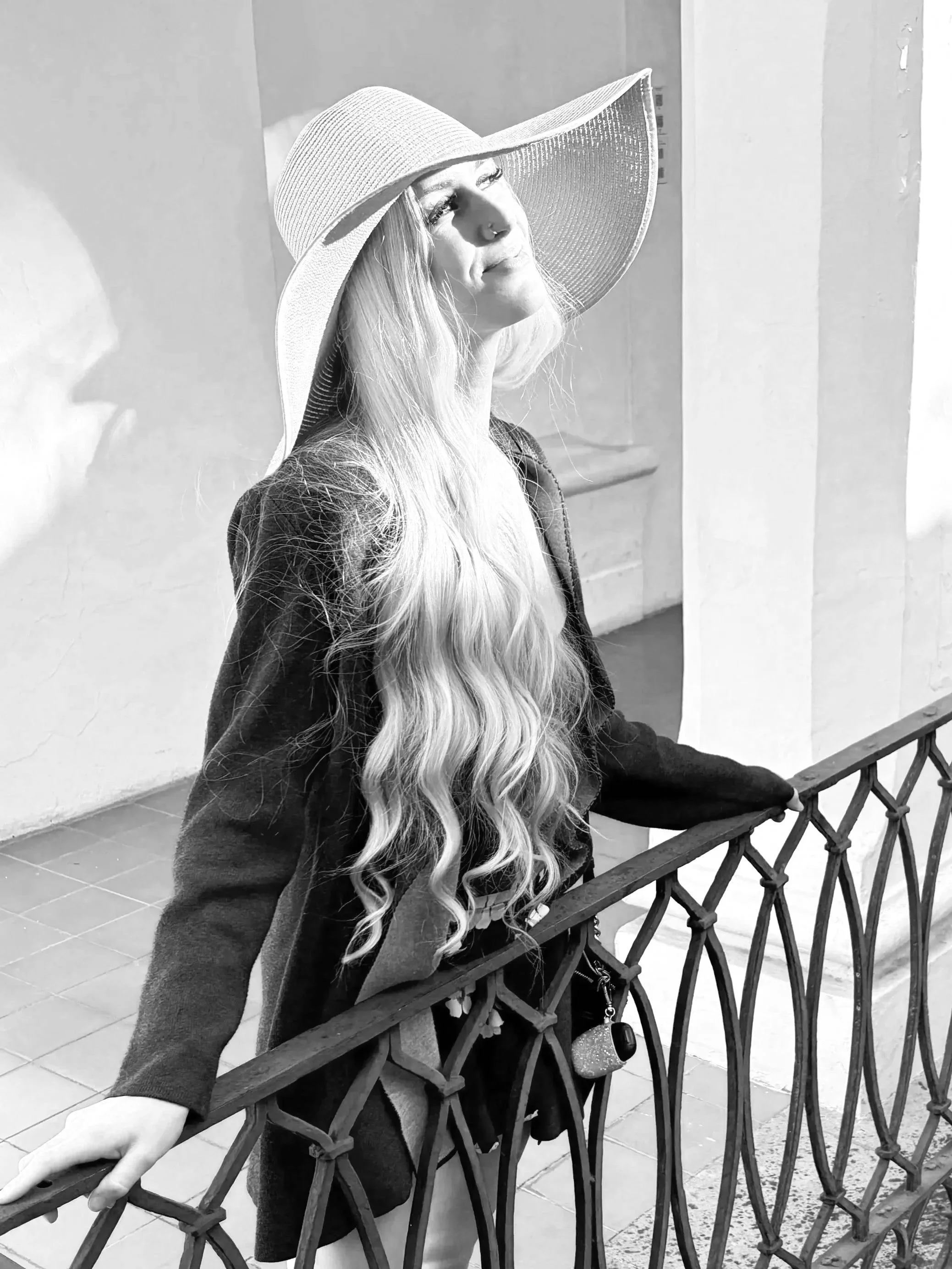
Sarah Cushing, RP
I became a therapist because
I know what it's like to struggle.
Before I became a therapist, I had to sit with my own questions — about who I was, what I needed, and whether healing was even possible. I know what it is to feel lost in a body you don't trust. I know the quiet exhaustion of keeping things together on the outside while something inside is fraying.
That experience doesn't make me your therapist because I've suffered — it makes me your therapist because I understand that suffering is not a flaw. It's a signal. And signals deserve to be listened to.
I completed my Master of Arts in Counselling Psychology at the University of Ottawa, with specialized training in eating disorder recovery, trauma-informed care, and somatic approaches to healing. I am registered with the College of Registered Psychotherapists of Ontario (CRPO) as a Registered Psychotherapist.
My practice is rooted in the belief that each person holds within them the capacity for healing — and that the work of therapy is not to fix, but to witness, to steady, and to walk alongside that process.
"Liminal" is the space between what was and what's next. Bloom is what becomes possible in that space — not despite the difficulty, but through it.
What therapy looks like
with me.
I believe the therapeutic relationship itself is healing. Not just as a backdrop — but as a living, present experience of being met, understood, and not left alone with difficult things.
This means I show up as a real person. I'm curious, I'm warm, and I'll be honest with you. I'll also make mistakes — and I think that's part of the work too.
Relational therapy also creates space for the deeper questions — questions of meaning, purpose, identity, and belonging. You don't need a diagnosis or a clearly named problem to do this work. Sometimes the question is simply: who am I, and how did I get here?
Every part of the work I do is shaped by an understanding of trauma — how it lives in the body, how it organizes our thinking and our relationships, and how it can be gently, carefully metabolized over time.
Trauma-informed doesn't mean trauma-focused. It means that I never ask more of you than your nervous system can hold. Safety always comes first.
We hold our histories in our bodies. Tension, breathing patterns, the way we sit in stillness — these are not separate from what we're working on in therapy. They are part of the text.
Somatic approaches allow us to track what the body knows and to use that information — not to override the thinking mind, but to bring both into greater alignment.
I practice from a weight-neutral, anti-diet, Health at Every Size (HAES)-aligned framework. This means I do not work toward weight change as a therapeutic goal.
The work centres on your relationship with your body — not your body's size. All bodies deserve care. All bodies deserve respect.
Education & Training
MA Counselling Psychology
University of Ottawa
Specialization in trauma and relational therapy
Registered Psychotherapist
College of Registered Psychotherapists
of Ontario (CRPO)
Somatic Experiencing (SE)
Foundation-level training in somatic
approaches to trauma resolution
Eating Disorder Certificate
Specialized training in eating disorder
recovery, HAES-aligned approaches
EMDR Basic Training
Eye Movement Desensitization and
Reprocessing for trauma
Internal Family Systems (IFS)
Level 1 training in parts-based
therapy approaches
If something here
resonates with you
I offer a free 20-minute consultation so we can get a sense of one another before you decide. No obligation — just a conversation.
You can take the next step when you're ready.